
Digital games are playful interactions full of cultural and artistic expressions. Malmö's new accelerator, the Playful Arts Accelerator, examines how games and interactive art function as contemporary culture. Five projects have been selected to create playable art, and will be exhibited as the accelerator wraps up at the end of the year.
Moving past the tiresome question of whether games can be art, the Playful Arts Accelerator examines how games and interactive art function as contemporary culture. The accelerator was launched on 1 September, and during the three-month program, the five selected projects are expected to challenge the boundaries between player agency, aesthetics, and fine art.
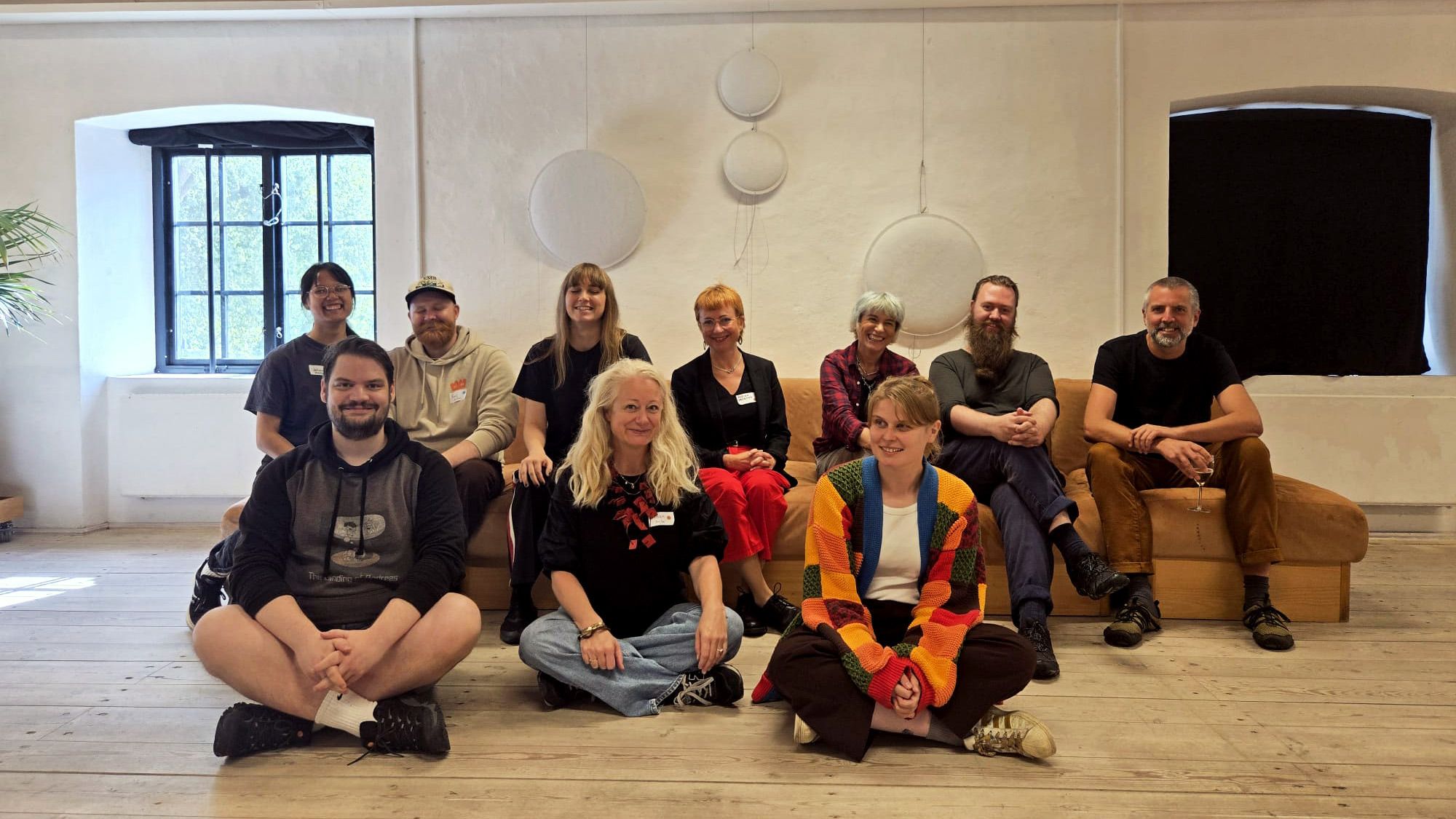
Accelerator participants and staff managing the program. Back row, from left to right: Johanna Granström, Harry Berglund, Emma Bexell, Marika Hedemyr, Bobbi A Sand, Carl Olander, and Christian Björklund. Front row, from left to right: Andreas Larsson, Andrea Brasch, and Deborah Carlander.
The projects
The participating projects have all been selected for their brave and innovative approach and their high artistic ambitions. The projects display distinct approaches to interaction, medium, and subject matter, and the aim is for them to develop into truly unique experiences. Selecting the participating projects out of all the applications, were a jury of nine people with extensive experience in arts and games.
Some of the participants have come together on their project specifically to join the accelerator program, some have recently founded a company based on their project, and some join by bringing in experience from working in their field for a very long time.
The five projects participating in the Playful Arts Accelerator are:
Small Press Play
By Ylva Oknelid
Analogue to Digital: An exploration into transforming the physical aesthetics and counter-cultural of zines into interactive media.
Project Conga
By Johanna Granström, Egil Österlind, Harry Berglund, and Julia Österlind
Eco-Critical Systems: A deceptive, seemingly traditional roguelike game that confronts the real-world CO₂ emissions of game production and consumption.
Learn more about the team and project
Trolldom
By Deborah Carlander, Andreas Larsson, and Carl Olander
Neurodivergent Lived Experience: An intimate interactive narrative exploring masking, navigation, and identity through the lens of living with AuDHD.
Cubes
By Christian Björklund
Generative Audio Design: A dynamic musical game that organically evolves and expands in real time based on user audio input.
Learn more about Christian Björklund
Skiljelinjer
By Marika Hedemyr, and Emma Bexell
Public Space & Safety: A performance lecture dissecting safety, perception, and vulnerability across Malmö's urban environment.
Learn more about Marika Hedemyr
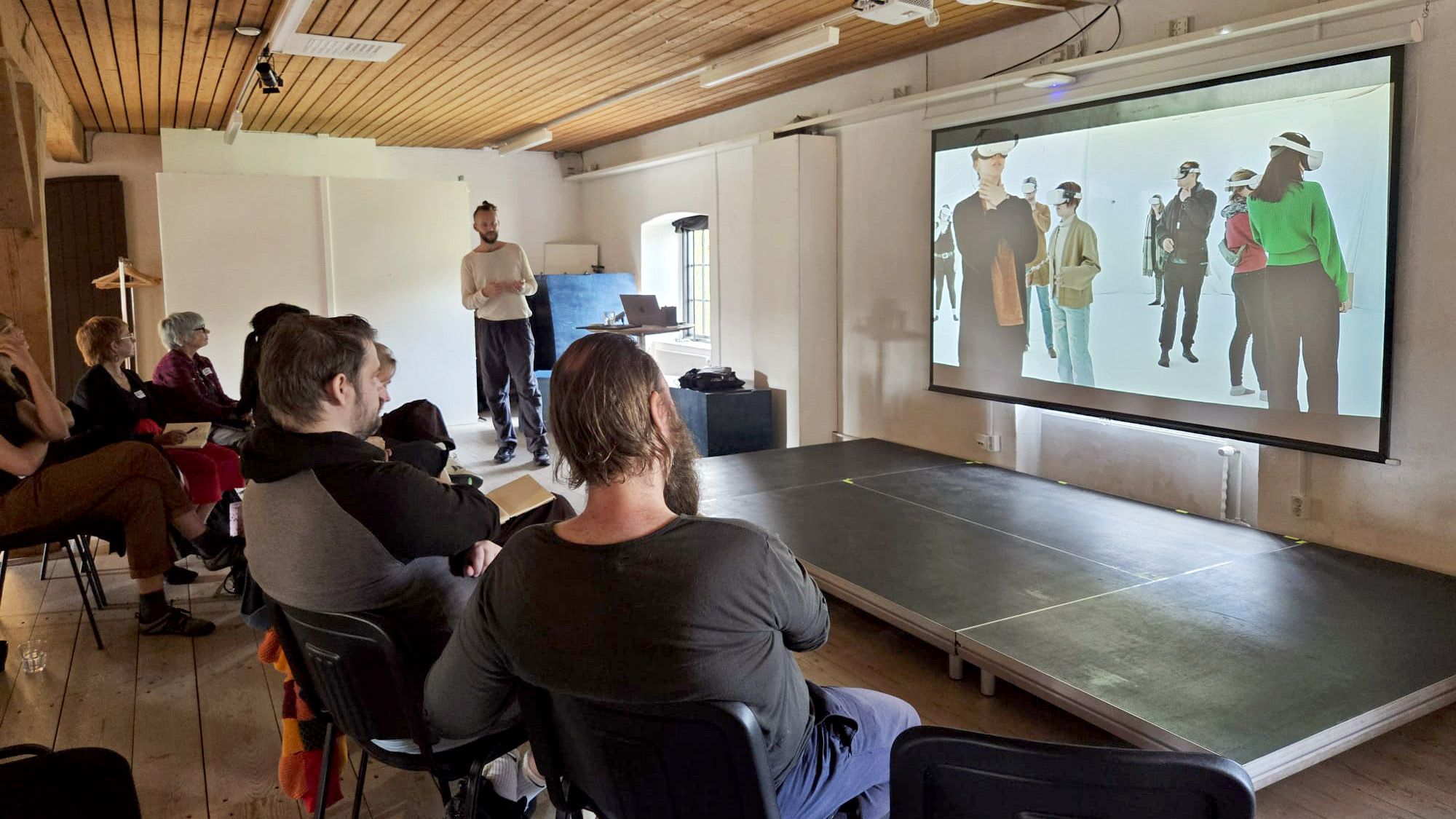
Artist Jakob Skote, Untold Garden, gives an inspirational talk on art and interactivity.
The accelerator program
For the participants, the Playful Arts Accelerator acts as a platform, allowing the projects to flourish in an exciting ecosystem, while collaborating, playing and exchanging knowledge on their creations.
The program started 1 September and ends with the projects being exhibited at STPLN in Malmö, Sweden, on 20-22 November.
– The first few weeks of the Playful Arts Accelerator have been a whirlwind of getting to know our participants, diving into their projects, and figuring out how we best support them, says the accelerator’s producer Andrea Brasch.
Being accepted to the accelerator, each project is supported by a 50,000 SEK grant, coupled with dedicated tailored mentorship, and talks and workshops.
Participants have already had talks and workshops on art and interactivity by artist Jakob Skote, and on funding opportunities in Sweden, the Nordics, and Europe by Bobbi A Sand, Andrea Brasch, and Hanna Olsson. Among upcoming talks and workshops are a skill swap session, pitching sessions, and a talk by Margot Edström on digital art.
The Playful Arts Accelerator is hosted by the Swedish Games Institute, and is open to artists and creatives from diverse fields. The accelerator is initiated and supported by Region Skåne, with additional support from Malmö Stad. The accelerator is run by Game Habitat.